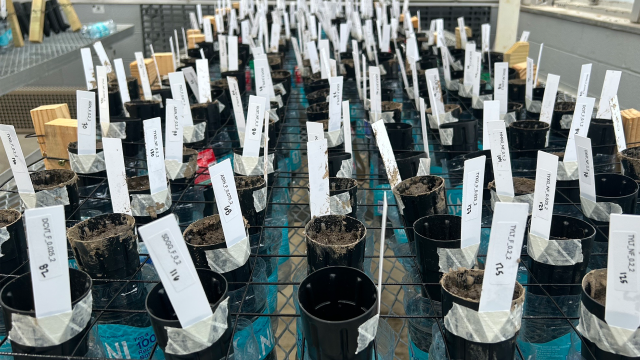
Across Ohio State, faculty, staff and students are finding creative ways to keep materials in use and out of the landfill. From recycling hard-to-recycle plastics to repurposing materials for research and other campus uses, these efforts demonstrate how collaboration can help extend the useful life of materials.
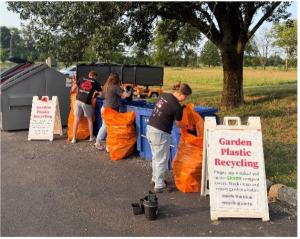
Facilities Operations and Development (FOD) Recycling and Refuse Services (RRS) works with campus partners to identify opportunities to recycle and reuse materials that might otherwise be discarded. Together, these partnerships help advance resource conservation and support a more circular campus by keeping materials in circulation longer and out of landfills.
In August 2026, the Garden Plastic Recycling Program, a partnership between the College of Food, Agricultural, and Environmental Sciences (CFAES) and FOD Recycling and Refuse Services recycled more than 1,500 pounds of garden plastics, including nursery pots, trays and other horticultural materials. By collecting these materials for recycling, the program helps divert hard-to-recycle plastics from the landfill and gives them an opportunity to be transformed into new products.
If you missed this program, you can still participate in the #6 plastics collection site behind Nationwide & Ohio Farm Bureau 4H Center at 2201 Fred Taylor Dr. The site is operated by Chadwick Arboretum and Green Team ERG.
Researchers in the Department of Evolution, Ecology, and Organismal Biology (EEOB), in collaboration with FOD Recycling and Refuse Services, found a new use for single-use plastic bottles by repurposing them for research before they were recycled.
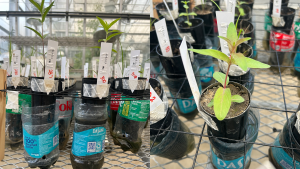
The bottles were repurposed to support a wetland research project studying how changing water levels and field soil affect the growth of Ohio’s wetland plants and their partnerships with beneficial soil fungi. To maintain precise water levels for nearly 500 plants, researchers modified the reused water bottles to simulate flooded and non-flooded conditions. The project also incorporated reclaimed lumber to construct several experimental frames, demonstrating how existing materials can support innovative research while reducing waste. Once the research is complete, the bottles will be cleaned and recycled, extending their useful life even further.
"One goal for this project was to make sure to source as much of our supplies from secondhand or recycled sources, so it was great to work with RRS to find ways to reuse discarded bottles in order to aid our experiment. Using recycled water bottles helped streamline the project and allow us to expand the scope of our research while helping find a new purpose for single-use plastics” said Bryan Gilleland, a master’s student in the Hovick Lab, EEOB.

The Polar Rock Repository (PRR) at Ohio State’s Byrd Polar and Climate Research Center is another example of a campus partner finding new uses for materials. In collaboration with FOD Recycling and Refuse Services, the PRR is helping give authentic wooden Antarctic rock boxes a second life.
These wooden boxes are built at McMurdo Station in Antarctica and initially used to transport supplies for researchers working in the field. As supplies are used, the boxes are repurposed to transport rock samples collected during research back to the researchers’ home institutions.
At Ohio State, the PRR serves much like a library, but instead of books, it preserves and provides access to Antarctic rock samples for research. The repository was established to prevent samples from being discarded after they are studied and allows researchers to reuse and reexamine existing samples, reducing the need to collect new samples and helping save both resources and carbon emissions.
Rather than sending the wooden boxes to the landfill after their research use, FOD Recycling and Refuse Services is helping identify opportunities to give them another purpose around campus and in the community, including use as bookshelves, garden flower beds, and other creative projects. This partnership demonstrates how materials used to support scientific research can continue to provide value long after their original purpose.
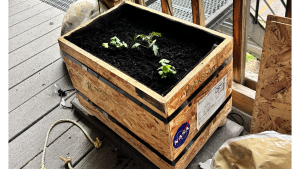
“The PRR’s ultimate goal is making Antarctic Earth science more accessible and sustainable. When we get large donations from researchers, they often send their samples in the boxes they originally built for them down in Antarctica. The rock boxes aren’t just a vessel for samples, but a little bit of Antarctic history. We love being able to share the PRR’s love for sustainability (and Antarctic research) with the public in a creative way.” said Erica Maletic, Curator of the PRR.
Together, these recycling and reuse efforts demonstrate that keeping materials out of the landfill doesn't always require a new solution; it can start with recognizing the value in something that already exists. By working across departments and finding creative applications for materials, Ohio State can conserve resources, support research and create new opportunities for materials to have a second life.
Does your work area generate a material that is currently being discarded, but you think could be recycled or reused? FOD Recycling and Refuse Services wants to hear from you. Contact recycle@osu.edu to discuss your idea and explore whether there may be an opportunity to give that material a second life.