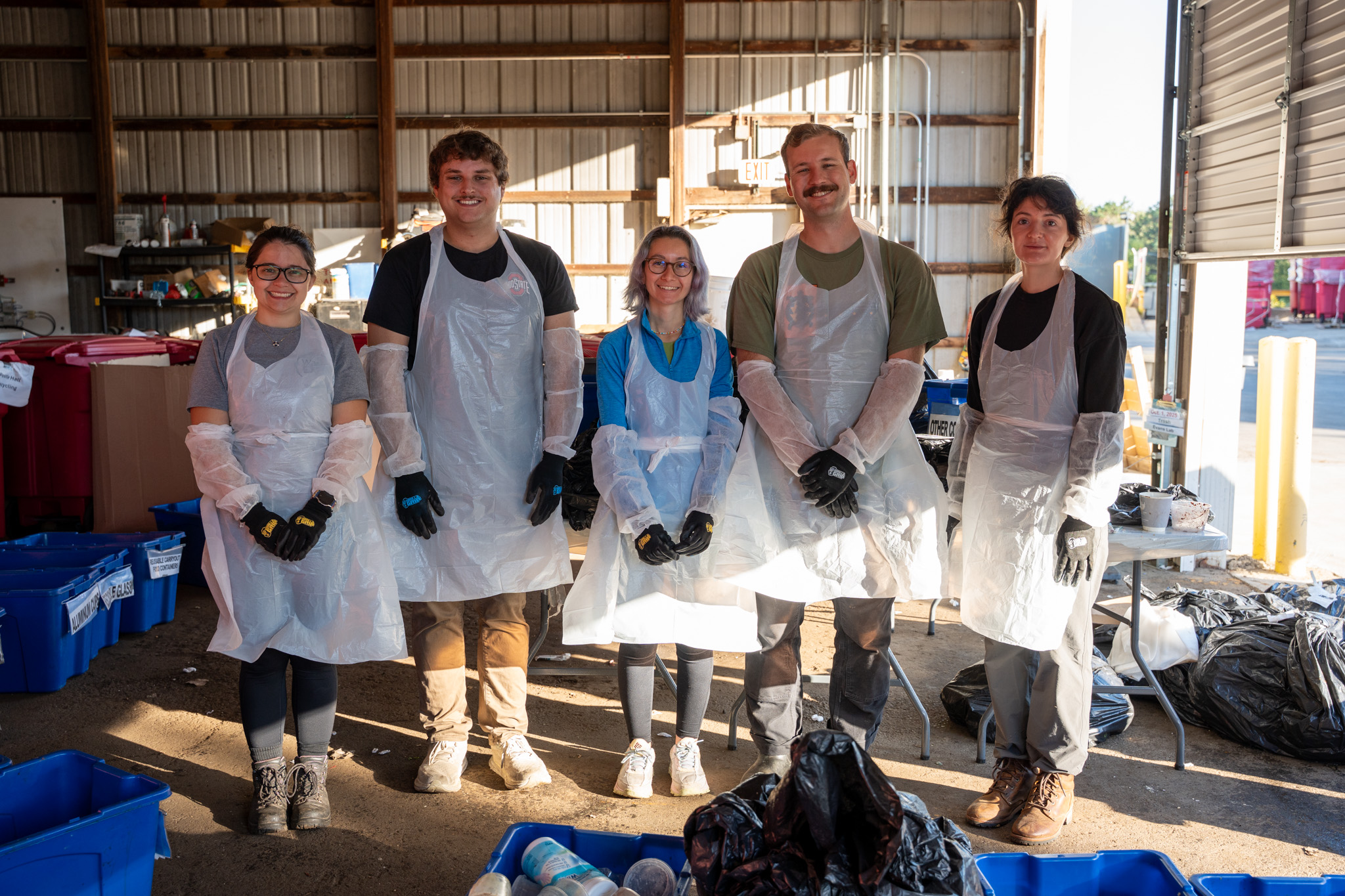
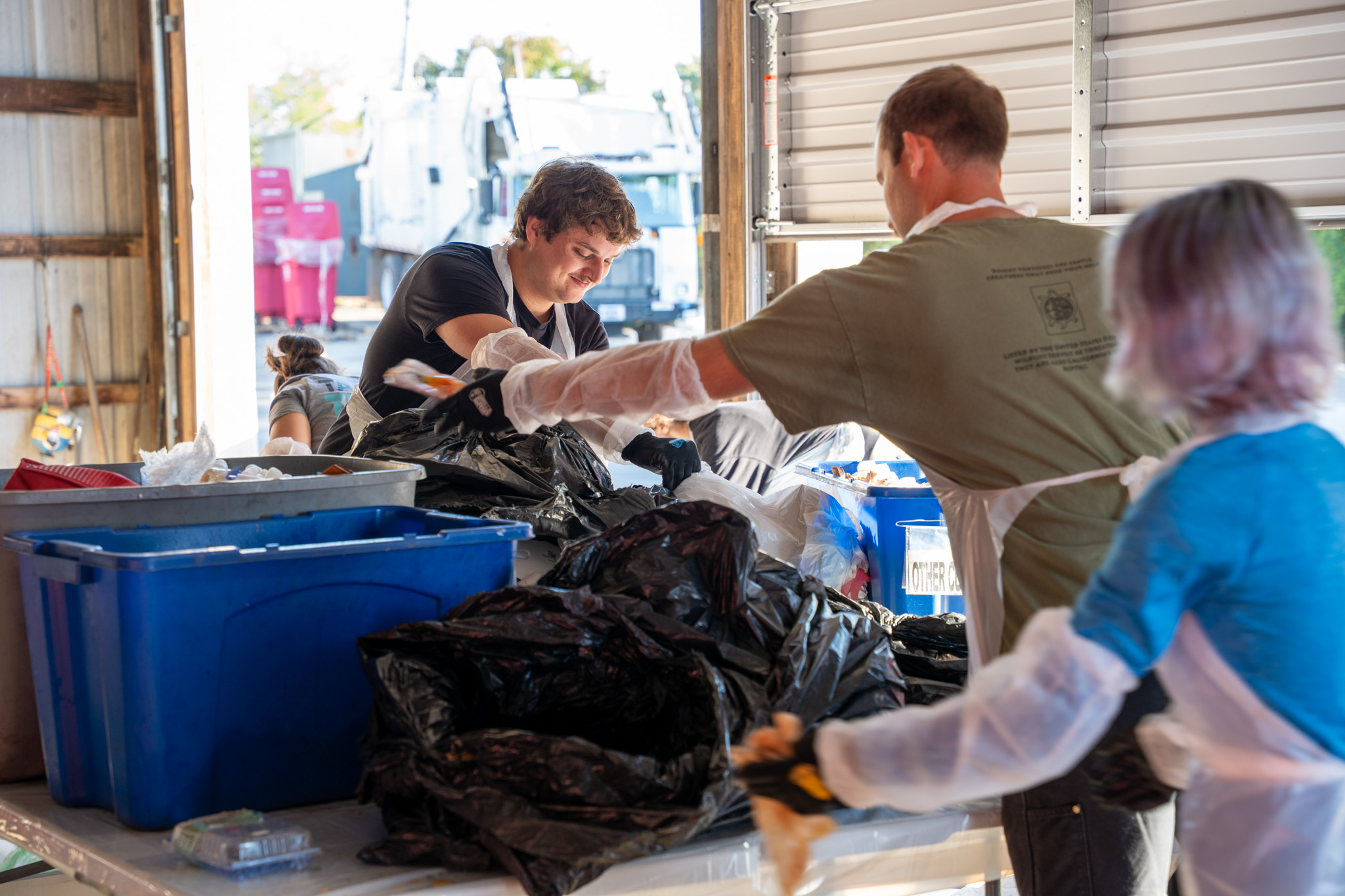
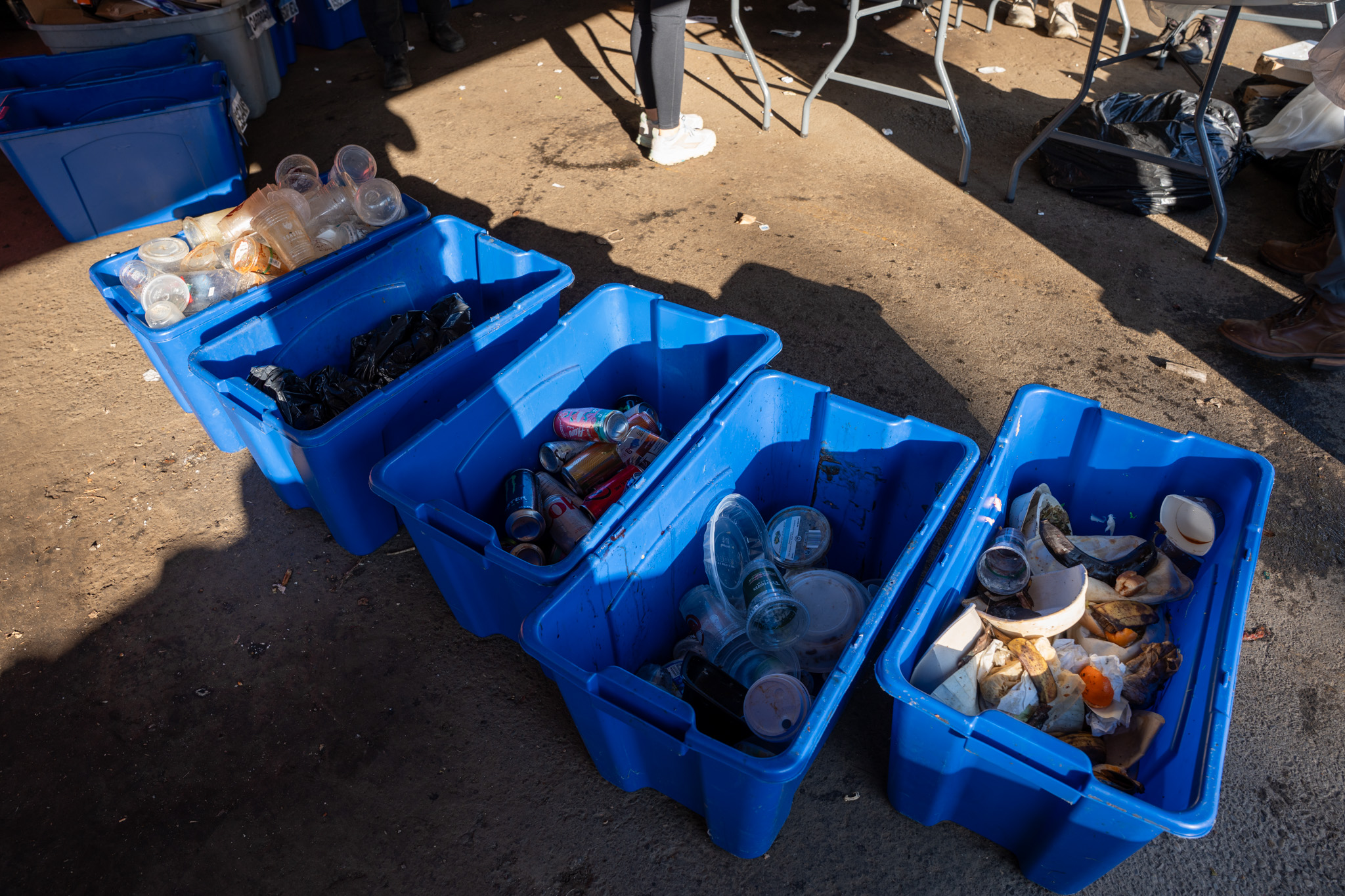
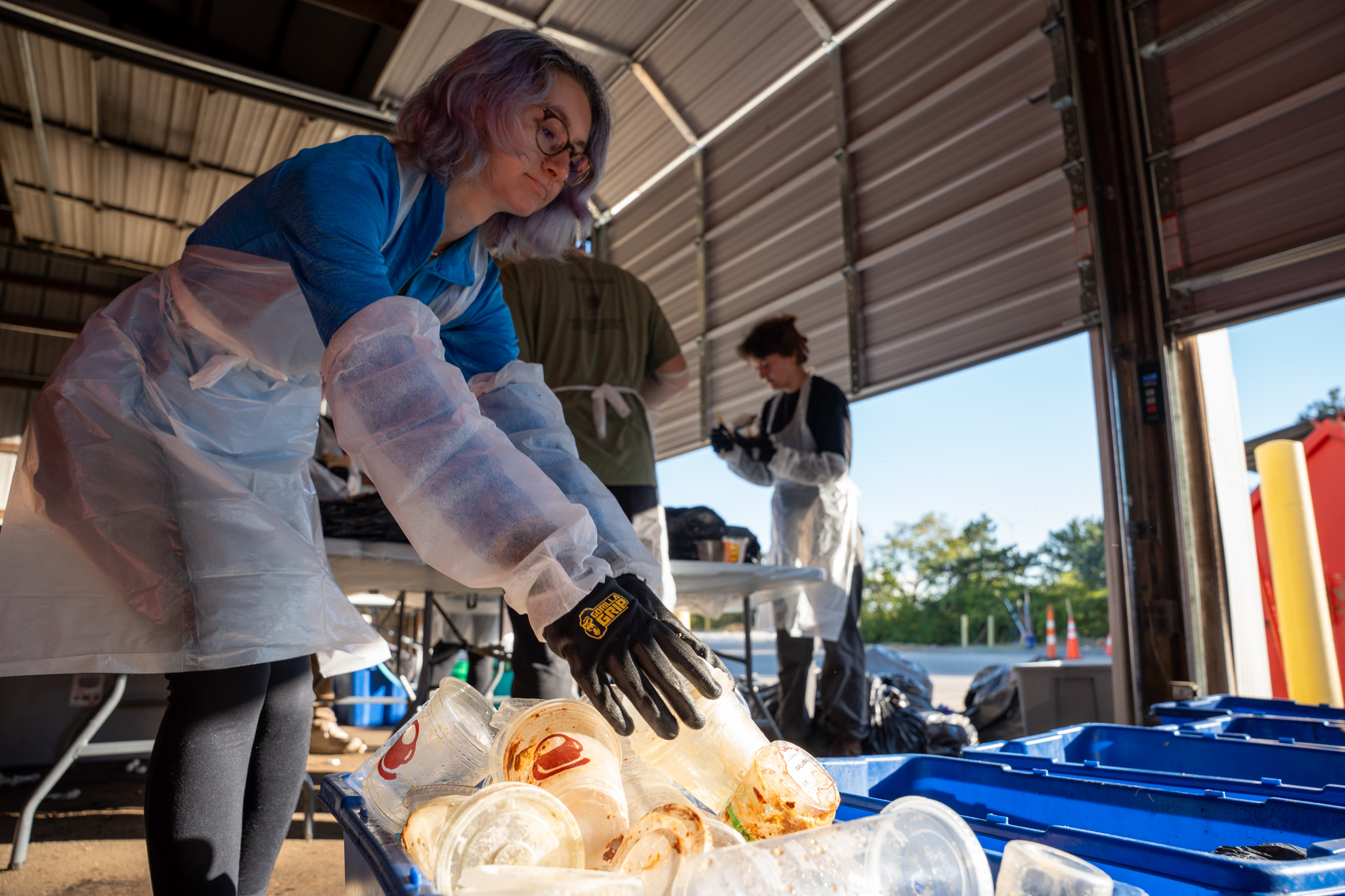
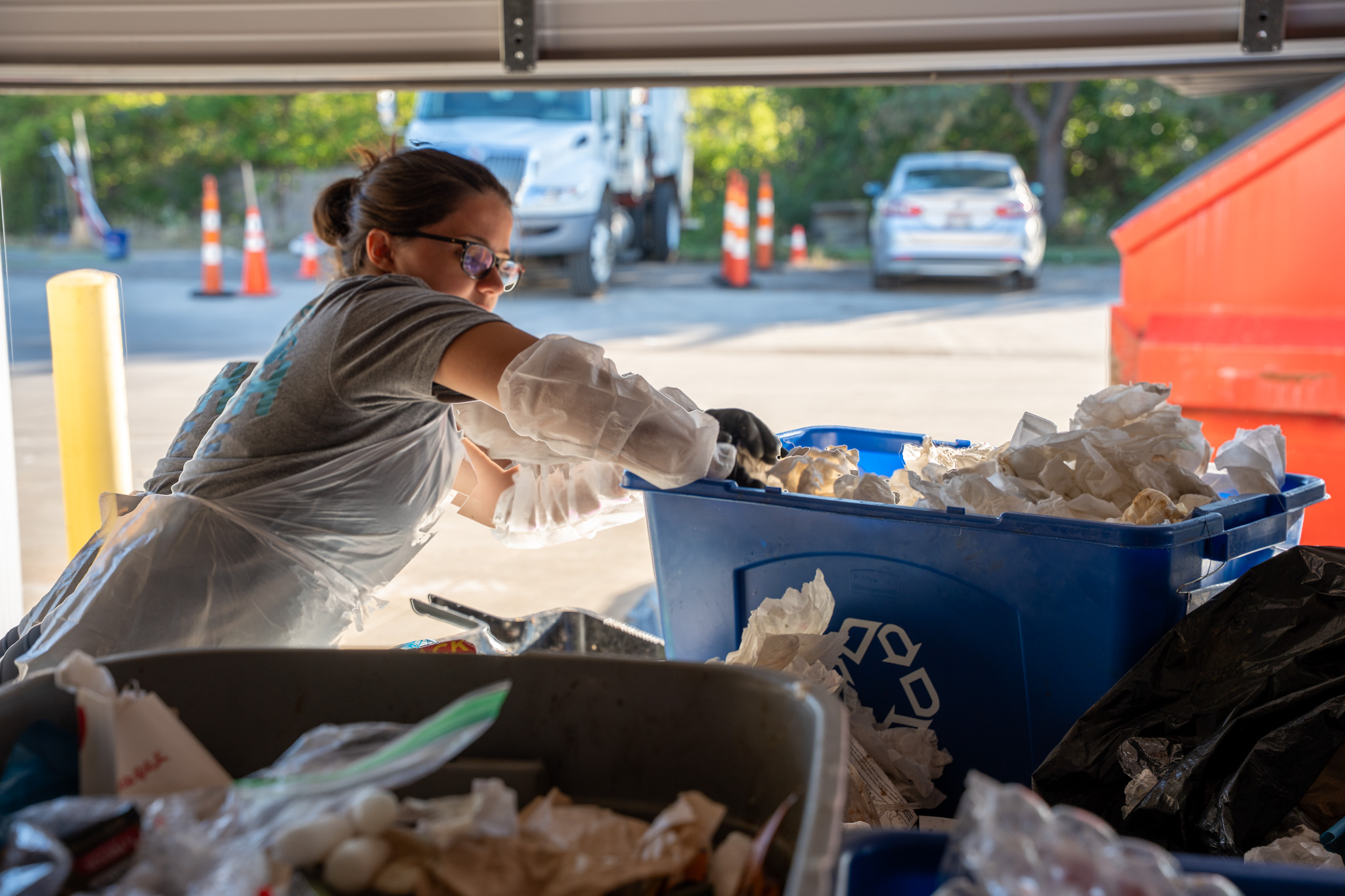
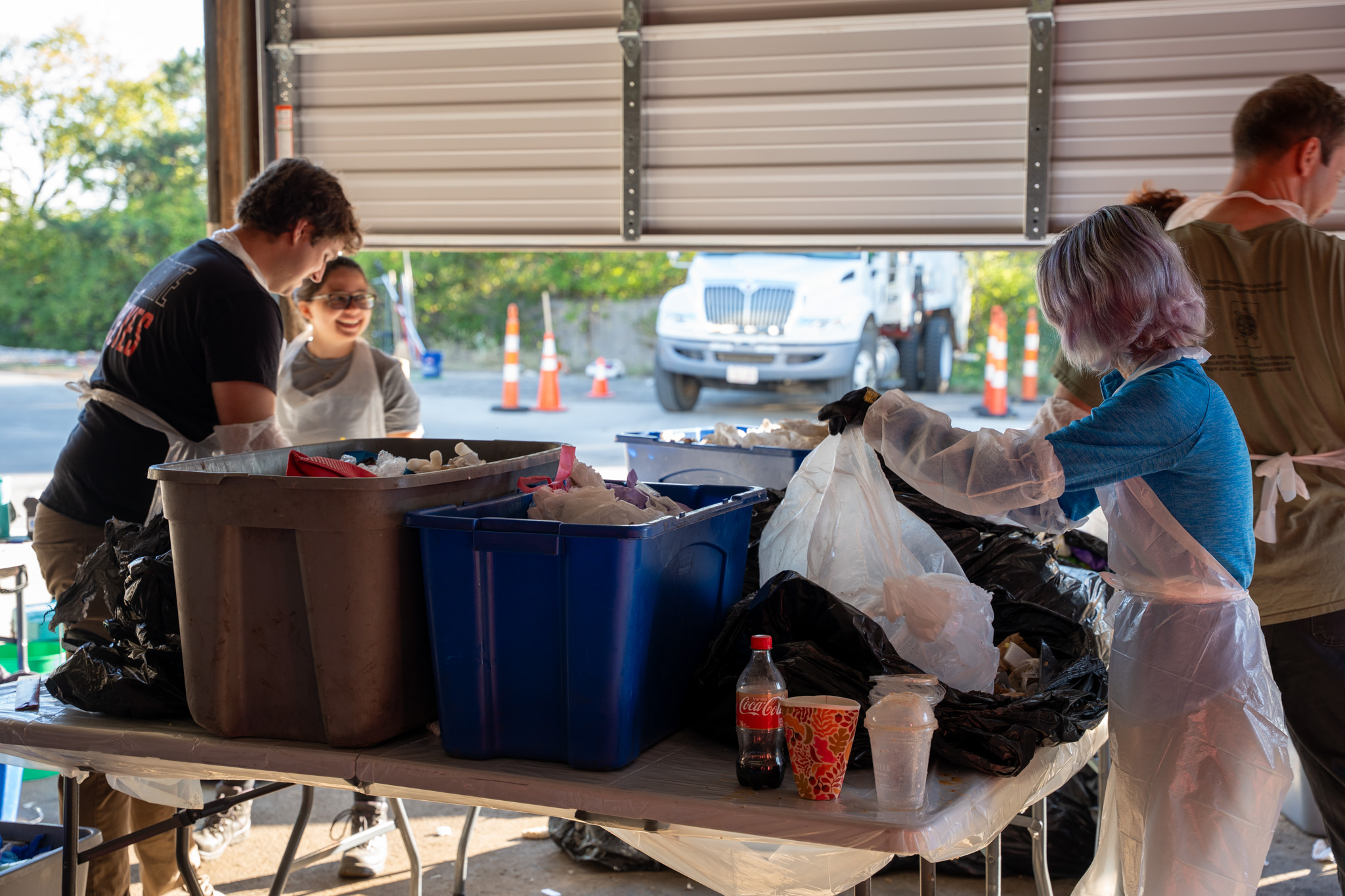
The results are in from Facilities Operations and Development’s (FOD) 2025 Waste Characterization Study, which examined waste and recycling across Ohio State’s Columbus campus. This study was made possible through funding from Coca-Cola Consolidated, supporting the university’s ongoing resource stewardship efforts.
The study revealed a clear opportunity: more than half of what is currently thrown away could be recycled or composted today using existing campus infrastructure and programs.
What’s in the trash?
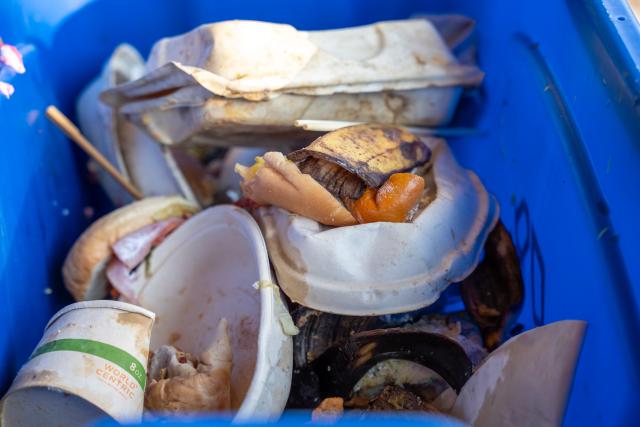
The study found that a large portion of materials placed in trash bins could have been recovered:
- 31% of discarded materials were food waste, compostable serving ware and compostable fibers such as paper towels and napkins.
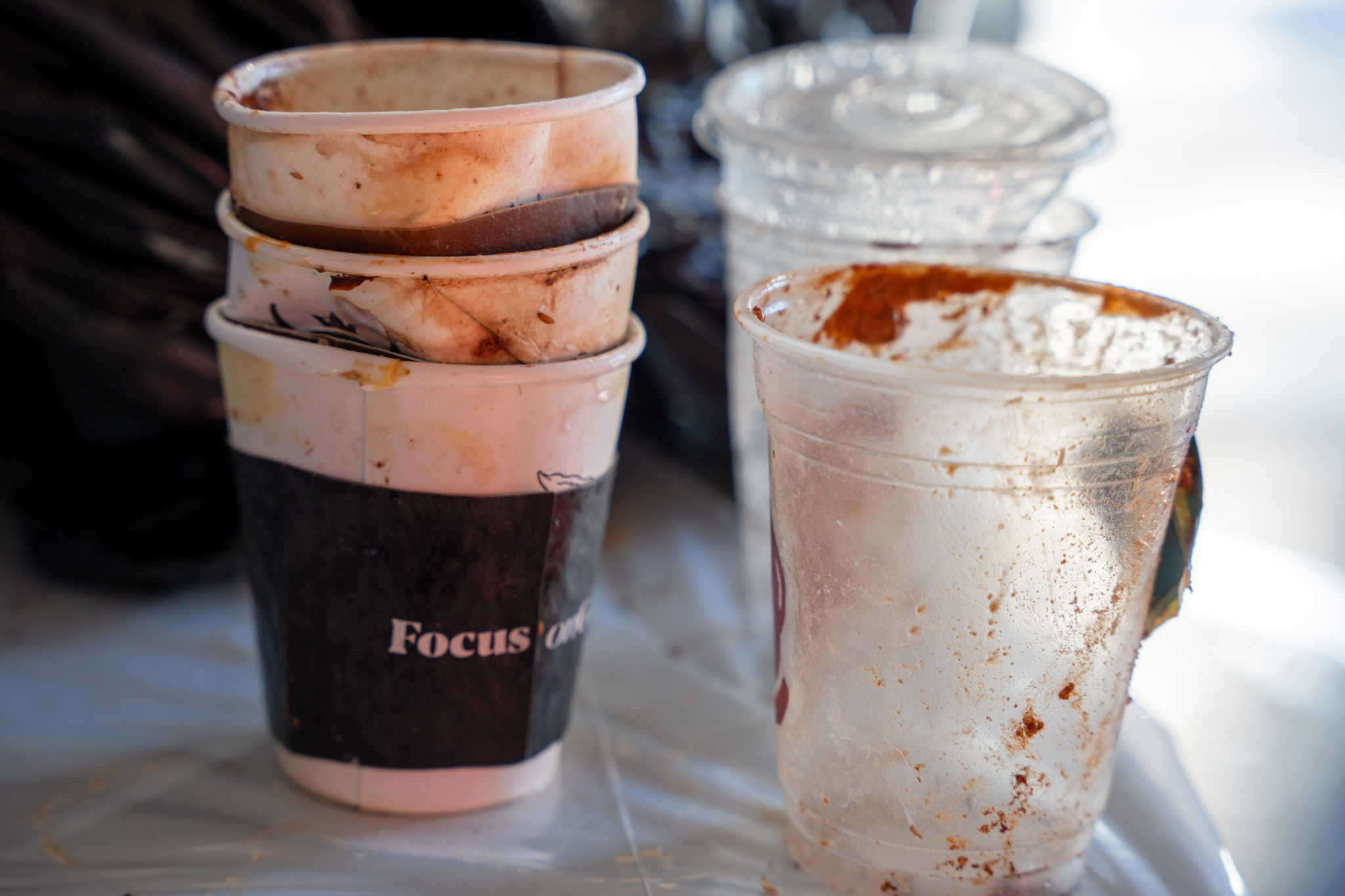
- 19% consisted of recyclable materials, including plastic bottles, tubs, jugs, cups, clamshells, paper, cardboard and aluminum cans.
- The largest sources of recycling contamination were non-recyclable plastics, such as film plastics, plastic silverware and Styrofoam.
“These waste studies allow our team to evaluate the effectiveness of Ohio State’s recycling systems in different types of buildings,” said Molly Kathleen, zero waste manager for FOD. “Having this granular data helps us strategically prioritize waste reduction initiatives so we can most efficiently make progress toward achieving zero waste.”
How you can help
The campus community plays a critical role in waste diversion. You can help by:
- Learning what can and can’t be recycled on campus using the recycling guide online.
- Using designated recycling bins, marked with red “RECYCLE” signs or other recycling labels.
- Keeping recyclables clean and dry to prevent contamination.
- Exploring answers to frequently asked recycling questions.
- Reaching out to recycle@osu.edu with questions, for additional support, or for guidance on hard-to-recycle materials.
With simple actions and correct sorting, every Buckeye can help ensure valuable materials are recovered and continue Ohio State’s efforts to responsible resource stewardship.