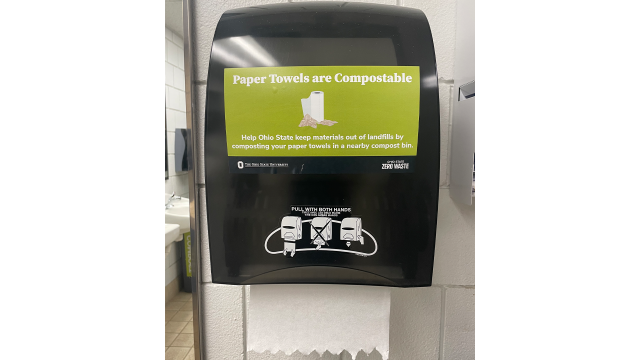
Facilities Operations and Development (FOD) is leading a university-wide effort to reduce the environmental impact of paper towel waste by installing high-efficiency hand dryers or a more sustainable single-use option.
In 2025, paper towels accounted for approximately 6.7% of all campus waste, more than 1,600 tons annually.
“Reducing waste at this scale requires both behavior change and smarter systems,” said Mary Leciejewski, associate director of Sustainability and Strategic Services for FOD. “By combining efficient technology, better sourcing and composing, we’re creating a more sustainable and cost-effective approach that benefits the entire campus.”
Since 2018, FOD has taken a strategic, campus-wide approach to reduce unnecessary paper towel use, lower disposal costs, and save custodial labor time. In non-clinical areas, high-efficiency hand dryers have been installed in busy restrooms to reduce reliance on single-use options while cutting both consumption and hauling expenses.
Where single-use products remain necessary, FOD is shifting toward more sustainable alternatives. A successful pilot of a Forest Stewardship Council (FSC)-certified product has demonstrated that remaining usage can be sourced from responsibly managed forests while broader waste reduction efforts continue. The product also features dissolving technology that reduces the risk of plumbing blockages by about 50%. Its manufacturer is located less than an hour from main campus, reducing emissions related to transportation and delivery. FOD plans to fully transition to this alternative by FY27.
In addition, these products are compatible with dispensers made from recovered ocean plastic, which FOD plans to pilot and expand as part of a more circular system. This purchasing initiative aligns with a composting pilot designed to divert used materials from landfills. By June 2026, paper towel composting will be available in 10 buildings, primarily in College of Food, Agricultural, and Environmental Sciences (CFAES) locations, with a potential expansion planned for autumn 2026.
Together, these efforts reflect FOD’s comprehensive strategy to advance resource stewardship initiatives and increase operational efficiency across campus.