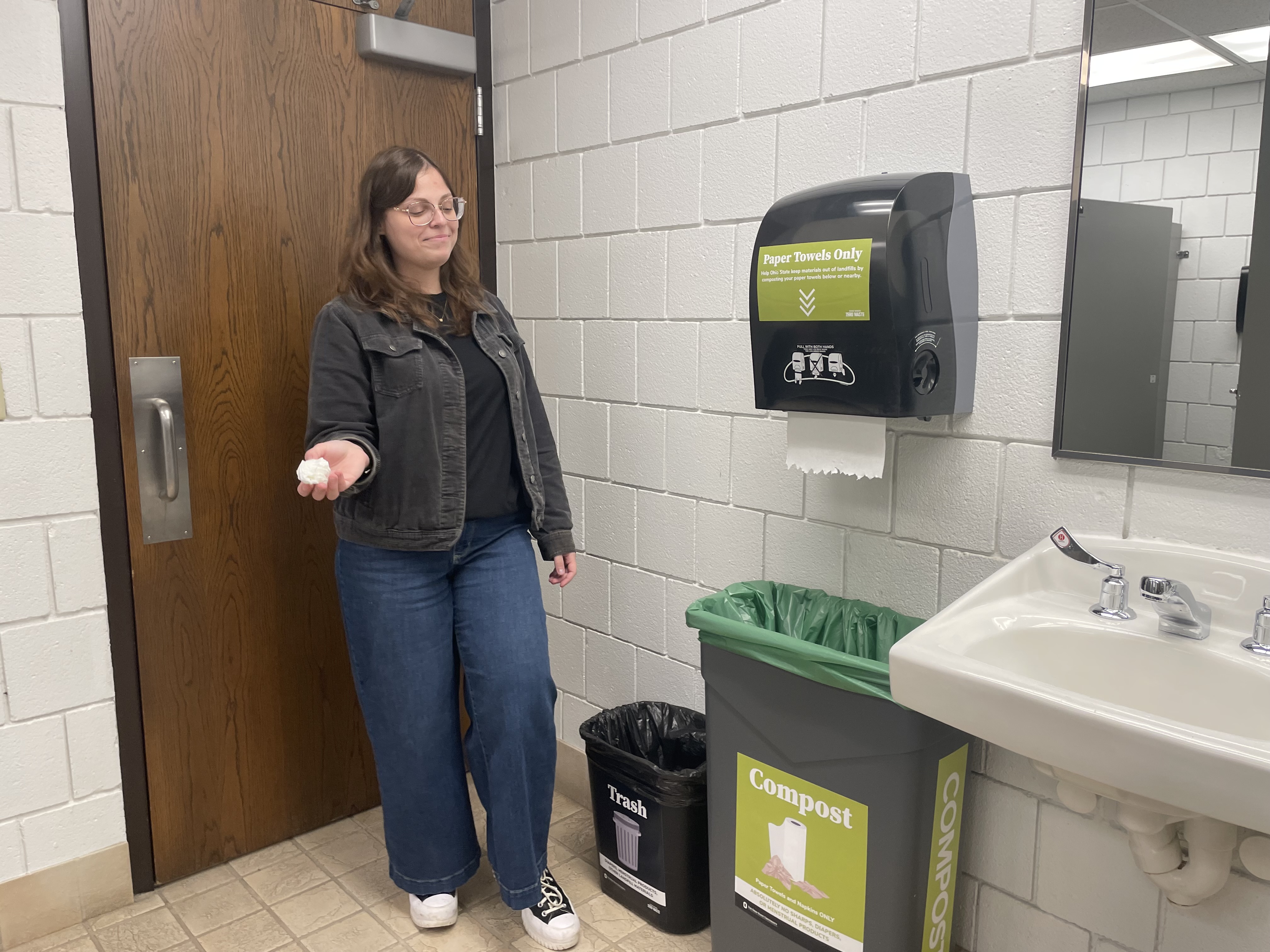
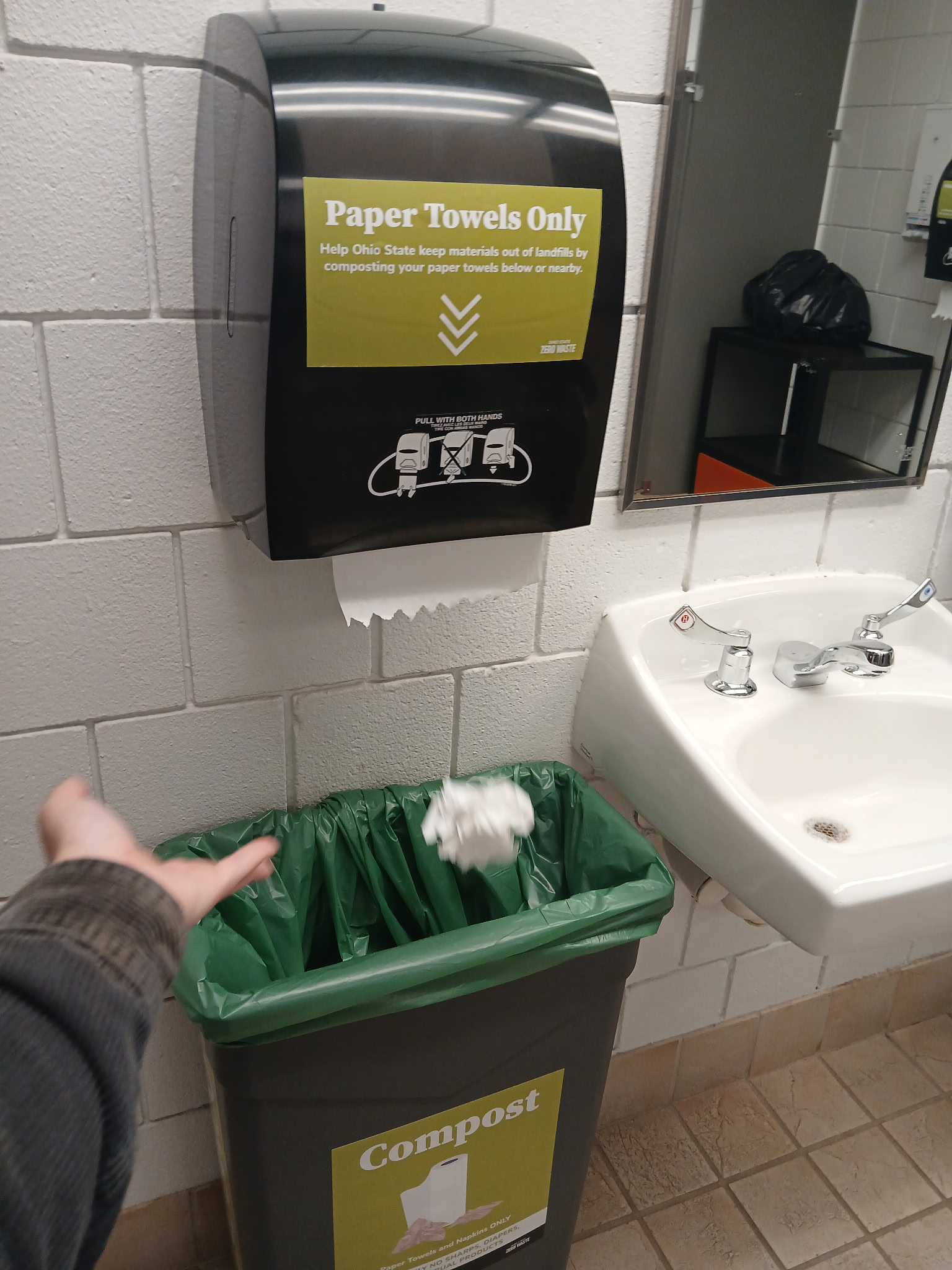
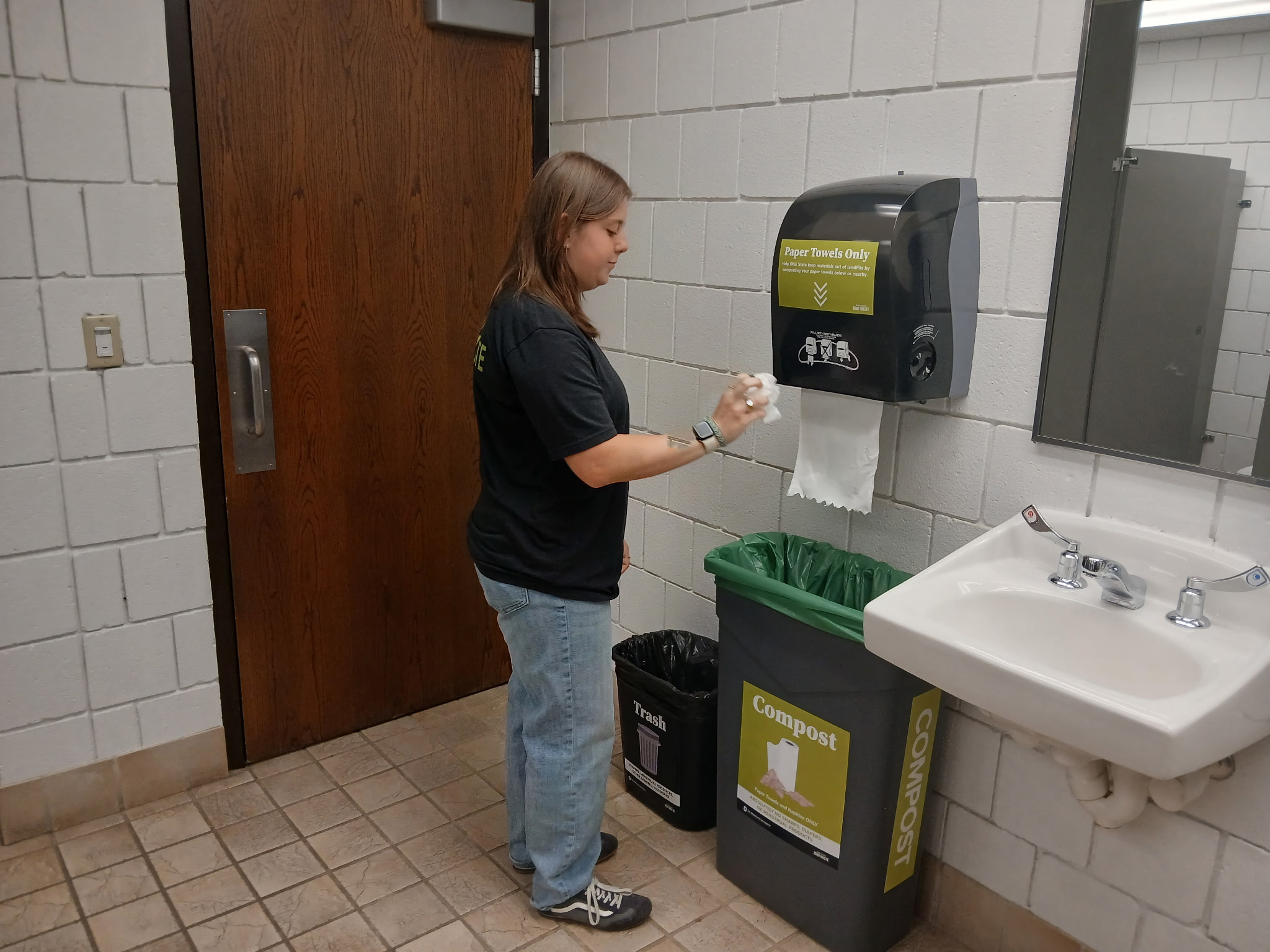
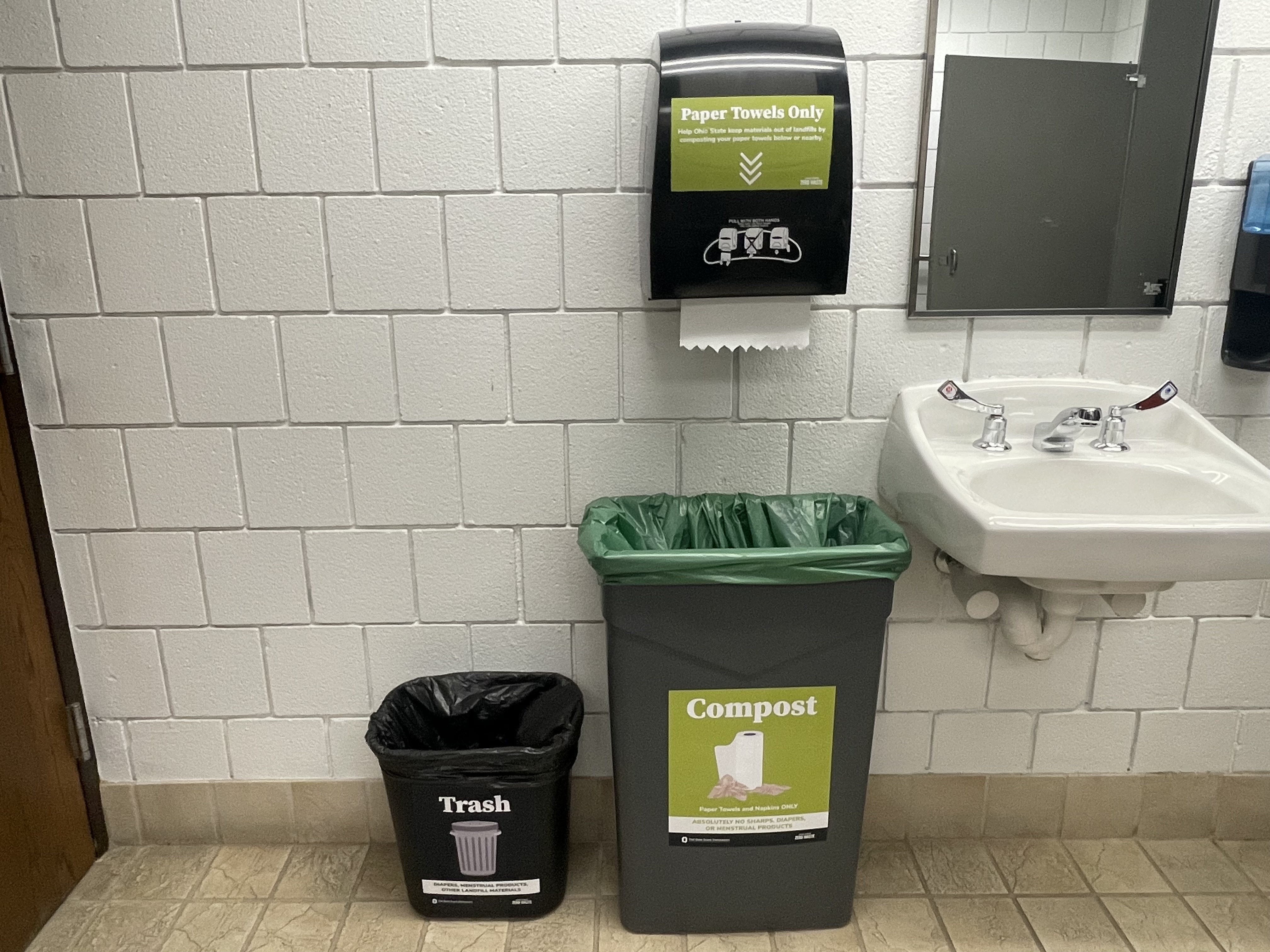
The Ohio State Facilities Operations and Development (FOD) Recycling and Refuse Services team and the College of Food, Agricultural, and Environmental Sciences (CFAES) have expanded composting efforts across most CFAES buildings on the Columbus campus. The initiative adds paper towel composting in restrooms and expands front-of-house composting in applicable areas.
Buildings included in the expansion are Agricultural Administration, Agricultural Engineering Building, Animal Science Building, Howlett Hall, Howlett Greenhouse, Kottman Hall, Ornamental Plant Germplasm Center, Parker Food Science and Technology Building, Plumb Hall, and the 4-H Center.
“This expansion would not be possible without the support of CFAES and FOD departments, including Recycling and Refuse Services and Custodial Services,” said Logan Gould, Zero Waste coordinator with the FOD Recycling and Refuse Services. “Custodial teams play a critical role in ensuring our facilities remain clean while also helping manage materials that support the success of this program.”
During the initial rollout at the Service Building Annex, roughly 1,000 pounds of paper towel waste, about the size of an average Ohio State dumpster, were diverted from the landfill between January and April 2026.
Fred Michel, a professor in CFAES’ Department of Food, Agricultural and Biological Engineering and a board member of the Ohio Organics Council, said that composting is a far better option than landfilling when hand air dryers are not an option and paper towels are unavoidable.
“Unlike when paper towels are converted to methane in a landfill system, paper towels in compost systems are converted to carbon dioxide and act as dry, carbon-rich ‘browns' that balance the wet, nitrogen-rich ‘greens' from food waste,” said Michel. “These composting bins support the growing movement toward organic waste recycling and the circular economy Ohio State has committed to move toward.”
The collaboration between FOD and CFAES has been central to the program’s success, enabling the development of a system that integrates into daily operations through coordinated planning, effective signage, and custodial support. CFAES has also played a key role in promoting the program across its internal communication channels.
The campus community is encouraged to do its part by using compost bins correctly and helping reduce contamination. Continued participation will support the success of the program and help lay the groundwork for future expansion across the Columbus campus.